

Bridal fashion does not always need dramatic embellishment to make an impression. A designer lehenga choli can create a graceful bridal look through thoughtful tailoring, refined embroidery, and carefully selected fabrics. The right combination allows brides to feel beautifully dressed while keeping the overall appearance elegant and personal.
Many brides now prefer outfits that feel luxurious without becoming overwhelming. Instead of choosing every decorative detail available, they often look for balanced silhouettes, meaningful craftsmanship, and colors that complement their personality. This approach makes the bridal outfit feel distinctive while still preserving the richness expected from traditional wedding fashion.
Letting the Silhouette Lead the Look
The shape of a lehenga can influence the entire bridal appearance before embroidery or accessories are even considered. A fuller skirt creates dramatic movement, while a softer A-line silhouette can feel graceful and comparatively easy to carry. The blouse shape also affects how balanced the complete outfit appears.
Brides should consider comfort alongside visual appeal because wedding celebrations can continue for several hours. A well-fitted blouse, manageable skirt, and comfortable waistband allow natural movement throughout ceremonies and photographs. When the silhouette works properly, the bride can focus on enjoying the occasion instead of adjusting the outfit repeatedly.
Choosing Embellishment with a Lighter Touch
Detailed embroidery can add character without covering every inch of the outfit. Floral motifs, delicate borders, scattered sequins, and subtle threadwork create visual interest while allowing the fabric and silhouette to remain noticeable. This type of detailing can be especially appealing to brides who prefer understated luxury.
An embroidered lehenga can also create different moods depending on the placement and color of its embellishments. Metallic work brings a traditional richness, while tone-on-tone embroidery feels softer and more contemporary. Choosing one dominant decorative direction often creates a cleaner appearance than combining too many unrelated elements.
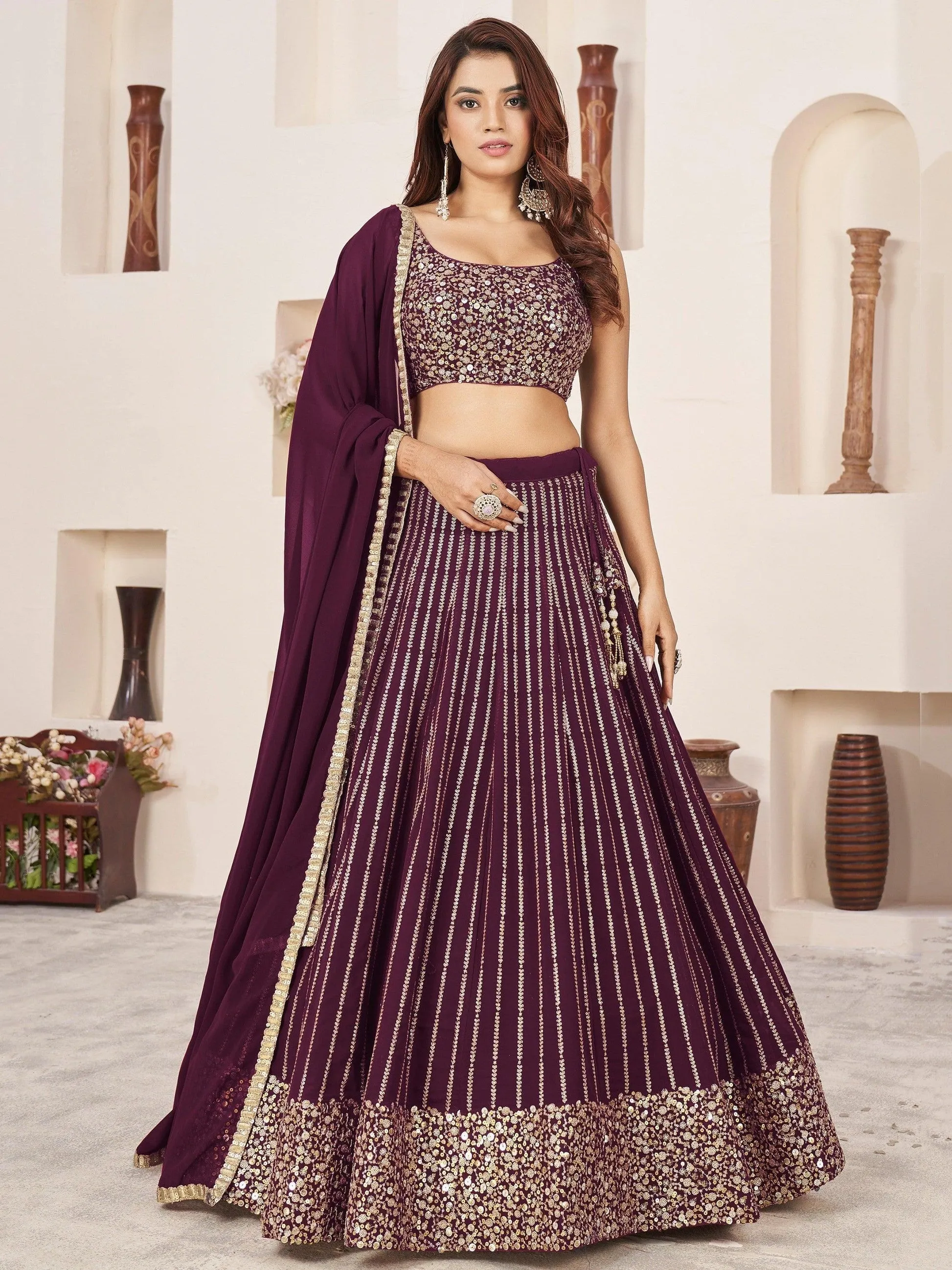
Color Choices Can Shape the Bridal Mood
Bridal fashion has expanded beyond traditional red and maroon, giving women more freedom to select colors that feel personally meaningful. Deep wine, emerald, blush, champagne, dusty pink, and muted gold can all create sophisticated wedding looks when paired with suitable embroidery and accessories.
The wedding setting can also influence the color decision. Bright shades may suit lively daytime ceremonies, while deeper or muted tones can look particularly striking during evening celebrations. Considering lighting, venue decoration, jewelry, and personal preference together makes the final choice feel more intentional.
Blouse Details Can Quietly Transform the Bridal Look
The blouse deserves careful attention because its neckline, sleeves, and back design can influence the entire silhouette. A structured neckline can create a polished appearance, while delicate sleeves or subtle embroidery add softness. Brides should choose details that complement the lehenga instead of competing with its main decorative elements.
Fit matters just as much as design when selecting bridal clothing. The blouse should allow comfortable movement during ceremonies, photographs, and celebrations without feeling restrictive. Proper tailoring also helps embroidery sit correctly across the fabric, giving the outfit a cleaner appearance from different angles throughout the wedding day.
Accessories Should Enhance the Craftsmanship
Jewelry can bring additional richness to bridal clothing, but the most successful styling usually leaves enough space for the outfit itself to remain visible. A statement necklace may work beautifully with a simpler neckline, while elaborate embroidery can pair better with earrings and delicate bangles.
The dupatta offers another opportunity to introduce personality without changing the entire outfit. A contrasting border, lighter second layer, or carefully arranged drape can alter the final appearance considerably. Footwear, handbag, and hairstyle should then follow the same visual direction for a cohesive bridal look.
- Match jewelry with the neckline and embroidery.
- Choose comfortable footwear for long ceremonies.
- Use the dupatta to introduce subtle contrast.
- Keep accessories balanced with the outfit.
Conclusion
The most memorable bridal outfits are not necessarily the most heavily decorated ones. They are the pieces that reflect the bride’s personality while offering comfort, thoughtful craftsmanship, and details that feel meaningful. A carefully selected silhouette and balanced embroidery can create elegance without making the overall appearance feel excessive.
Bridal fashion will continue introducing new colors, fabrics, and design ideas, but refined styling remains timeless. Choosing an outfit based on personal comfort and genuine preference allows the bride to feel confident throughout the celebration. When every detail feels intentional, the final look becomes more than a trend and turns into something genuinely memorable.
